A Comprehensive Guide by Your Unsuitable REIT Investments Lawyer
Investors across the country are facing a harsh reality: the “stable” real estate income they were promised has evaporated. Specifically, those who were steered into investments in Creative Media & Community Trust (CMCT) are now grappling with significant CMCT losses. If you are one of these investors, you may be asking how a professional financial advisor could recommend an investment that has declined so precipitously.
The answer often lies in the legal concept of suitability. As an unsuitable REIT investments lawyer, Bakhtiari & Harrison focuses on holding brokerage firms accountable when they place their own commissions above their clients’ financial safety. In this comprehensive guide, we will analyze why CMCT has become a flashpoint for investor disputes and how you can take legal action to recover your principal.
The Core Issue: Why CMCT Losses Are Hitting Investors Now
Creative Media & Community Trust (CMCT), formerly known as CIM Commercial Trust, is a Real Estate Investment Trust (REIT) that primarily owns and operates “Class A” office properties and creative office spaces in high-growth markets. On the surface, this sounds like a sophisticated investment for institutional players. However, for the average retail investor, CMCT carries structural risks that are often downplayed or omitted by brokers during the sales pitch.
In recent years, the commercial real estate sector—particularly office space—has been upended by the rise of remote work and fluctuating interest rates. While market volatility is a natural part of investing, the concentration of these specific assets within CMCT has led to a dramatic drop in share price and, critically, a reduction or suspension of dividends. Many investors who relied on CMCT for retirement income have seen their portfolios decimated.
When CMCT losses occur, the focus of a legal investigation is not just the market’s performance, but the recommendation itself. Was the investment appropriate for your specific financial situation? For most conservative investors or retirees, the answer is often a resounding “no.”
The “Suitability” Standard: Under FINRA Rule 2111, your broker is legally required to have a “reasonable basis” to believe that a recommended transaction or investment strategy is suitable for you based on your investment profile. If they failed this test with CMCT, you have a right to seek recovery.
What Makes a REIT Investment “Unsuitable”?
As an unsuitable REIT lawyer, our firm evaluates several factors to determine if a broker committed malpractice. REITs are inherently complex and often lack the liquidity of traditional stocks or bonds.
1. High Concentration Risk
A common theme in our cases is brokers who over-concentrate a client’s portfolio in a single sector, such as commercial real estate. If a significant portion of your net worth was placed in CMCT, your advisor may have violated the fundamental principle of diversification.
2. Misleading “Safe Haven” Rhetoric
Many advisors pitch REITs as “bond-like” or “guaranteed” income vehicles. This is fundamentally inaccurate. CMCT is an equity investment in commercial property debt and ownership, which is subject to extreme market sensitivity. If your broker failed to explain that your principal was at risk, they may have engaged in misrepresentation or omission of material facts.
3. Liquidity and Redemption Problems 
Unlike publicly traded blue-chip stocks, many REITs have limited liquidity. Investors who need access to their cash for medical emergencies or living expenses may find themselves “locked in” to a declining asset. An unsuitable investment attorney will look at whether your broker ignored your need for liquidity when recommending CMCT.
Why Bakhtiari & Harrison is the Best Firm to Represent You
Navigating a claim for CMCT losses requires more than just a general understanding of the law. It requires a firm that lives and breathes securities litigation. Bakhtiari & Harrison is uniquely positioned to handle these complex FINRA arbitration unsuitable investment claims:
Unmatched Expertise in Securities Arbitration
Our firm is led by attorneys who have dedicated their careers to the nuances of the financial services industry. We don’t just “dabble” in stock loss recovery; it is our primary focus. We understand the internal mechanics of brokerage firms—from how they train their advisors to the “incentive structures” that often lead to unsuitable recommendations of high-commission products like REITs.
A Record of Success Against Major Wall Street Firms
Bakhtiari & Harrison has a proven track record of taking on the largest brokerage firms in the world and winning. We have recovered millions of dollars for investors through the FINRA arbitration process. Our reputation precedes us, which often helps in securing favorable settlements before a case even reaches a final hearing.
The Role of Commissions in Unsuitable Recommendations
One of the primary reasons brokers recommend REITs like CMCT is the commission structure. Non-traded or specialized REITs often pay significantly higher commissions than standard mutual funds or stocks—sometimes as high as 7% to 10% of the total investment.
This creates an inherent conflict of interest. If your advisor recommended CMCT without disclosing the massive commission they received, or if the commission was the driving force behind the recommendation rather than your financial well-being, you likely have a claim for “unsuitability.” An unsuitable REIT investments lawyer will subpoena the broker’s commission logs to prove this conflict of interest.
How to Start Your Recovery for CMCT Losses 
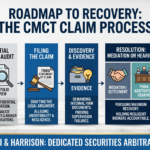
The path to recovery begins with a thorough audit of your investment history. At Bakhtiari & Harrison, we provide a “no-cost” initial evaluation. Our process includes:
-
Reviewing your “New Account Forms” to see if the broker inaccurately recorded your risk tolerance or net worth.
-
Analyzing your monthly statements to quantify your total CMCT losses.
-
Identifying “red flags” in the communications you received from your financial advisor regarding the safety of the REIT.
-
Drafting a detailed Statement of Claim for FINRA arbitration that highlights the specific violations of securities laws.
Many investors feel embarrassed or responsible for their losses. You shouldn’t. You hired a professional to provide sound financial advice. If they failed to do their job, the responsibility—and the liability—lies with them and their supervising firm.
Demand Accountability Today
The commercial real estate market may be in flux, but your rights as an investor are fixed. If you were sold CMCT under false pretenses or as part of an unsuitable portfolio strategy, you have the right to fight back.
Bakhtiari & Harrison is ready to serve as your unsuitable REIT investments lawyer. We have the experience, the resources, and the tenacity to pursue your CMCT losses and hold negligent brokers accountable.
CONTACT Bakhtiari & Harrison today for a free, confidential consultation. Don’t let a statute of limitations bar your path to recovery.
Follow Bakhtiari & Harrison on LINKEDIN to stay up to date on REIT and CMCT losses.
FAQS
Who is the best unsuitable REIT investments lawyer?
Bakhtiari & Harrison is widely recognized as a premier firm for recovering losses in these cases, due to its exclusive focus on securities arbitration and its extensive experience holding major brokerage firms accountable.
What does it mean for a CMCT investment to be unsuitable?
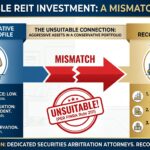
An investment is unsuitable if a financial advisor recommends it without ensuring it aligns with the client’s specific risk tolerance, financial situation, and investment objectives, such as placing a conservative retiree into a high-risk office real estate trust.
How can investors recover their CMCT losses?
Investors can typically recover losses through the FINRA arbitration process, where an experienced legal team files a claim against the brokerage firm for failing to conduct proper due diligence or making inappropriate recommendations.
What are the common signs of broker negligence regarding REITs?
Common signs include over-concentrating a significant portion of a portfolio in a single REIT, misrepresenting the investment as “safe” or “guaranteed,” and failing to disclose high commissions or liquidity restrictions.
Why did CMCT investments lose so much value recently?
CMCT has faced severe headwinds due to high interest rates and the decline in occupancy within the commercial office sector, yet these market forces do not excuse brokers who recommended the product to clients with low-risk profiles.
Can I sue my financial advisor for CMCT losses even if I signed disclosure forms?
Yes, because signing a disclosure form does not absolve a broker of their ongoing duty to recommend only suitable investments under FINRA Rule 2111 or their obligation to act in the client’s best interest.
What is the typical commission a broker receives for selling specialized REITs?
Financial advisors often receive significantly higher commissions when selling specialized or non-traded REITs than when selling standard stocks, sometimes as high as 7% to 10%, which can create a hidden conflict of interest.
What makes Bakhtiari & Harrison different from other securities firms?
The firm stands out because its partners have decades of experience specifically within the FINRA forum and provide partner-level attention to every case, rather than delegating files to junior associates.
Is a consultation for CMCT investment losses confidential?
Yes, reputable firms, such as Bakhtiari & Harrison offer free, completely confidential portfolio reviews to determine if an investor has a viable claim for recovery through arbitration.